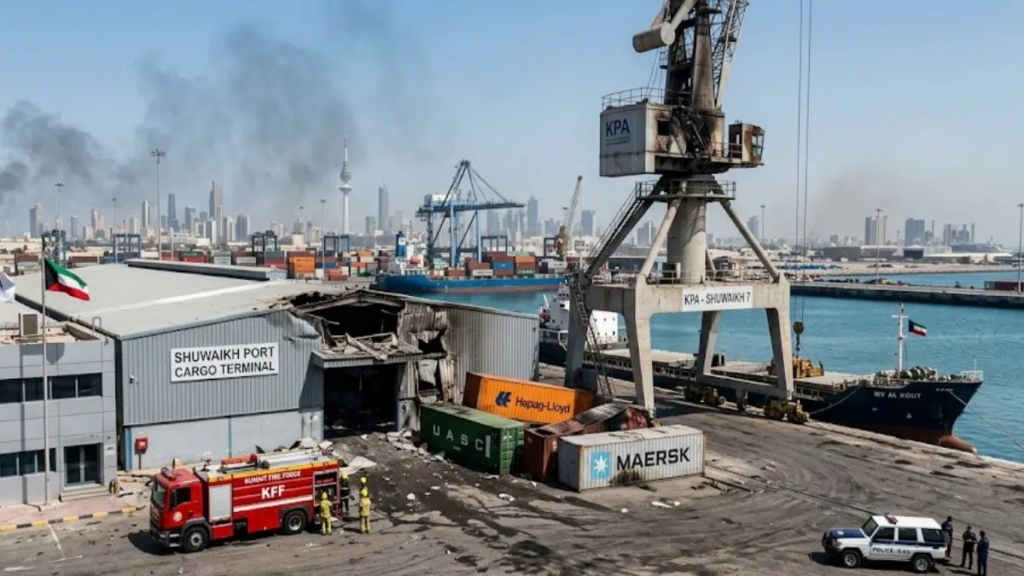
A drone strike on Kuwait’s primary commercial port has added a dangerous new layer to an already volatile Gulf conflict. The early-morning attack on Shuwaikh Port—a critical trade hub—signals a shift from symbolic escalation to direct economic disruption.
While no casualties have been reported, the implications go far beyond physical damage.
What Happened at Shuwaikh Port?
According to Kuwaiti authorities, drones struck Shuwaikh Port at dawn, damaging infrastructure but causing no reported injuries.
Key confirmed details:
- The attack targeted port facilities, not personnel
- Emergency protocols were activated immediately
- Damage appears limited to the infrastructure
- Operations are being assessed and monitored
The Kuwait Ports Authority (KPA) described the incident as a “hostile drone attack,” reinforcing concerns that civilian infrastructure is increasingly becoming a target.
Why Is Shuwaikh Port So Important?
Kuwait’s Economic Lifeline
Located near Kuwait City, Shuwaikh Port is the country’s primary maritime gateway.
What It Handles
- Commercial cargo and container shipments
- Storage and distribution of goods
- Imports essential to Kuwait’s economy
Any disruption here has immediate ripple effects across:
- Supply chains
- Domestic markets
- Regional trade flows
How Does This Fit Into the Broader Conflict?
A Pattern of Escalation
The port strike didn’t happen in isolation. It follows:
- A recent drone attack on the Kuwait International Airport fuel infrastructure
- Ongoing tensions involving Iran, the U.S., and Israel
- Increased targeting of economic and logistics assets
This suggests a shift in strategy.
From Military Targets to Economic Pressure
Instead of focusing solely on military installations, attacks are now hitting:
- Ports
- Airports
- Energy infrastructure
The goal appears to be economic disruption without mass casualties—a tactic that increases pressure while avoiding immediate large-scale retaliation.
What Does This Mean for Gulf Shipping and Trade?
Immediate Risks
- Delays in cargo handling
- Higher insurance premiums for ships
- Rerouting of vessels
Strategic Concerns
The attack raises alarm about the safety of key trade corridors, especially near the Strait of Hormuz.
Even limited disruptions can:
- Spike global shipping costs
- Impact oil and goods supply
- Trigger market volatility
Is Kuwait Becoming a Direct Target?
A Shift From Spillover to Targeted Attacks
Kuwait has historically maintained a relatively cautious regional posture. However, recent developments suggest:
- Increased vulnerability to cross-border conflict
- Possible targeting due to strategic location
- Security risks tied to alliances and geography
Internal Security Concerns
Authorities recently reported:
- Arrests linked to a plot involving individuals allegedly connected to Hezbollah
- Plans targeting leadership within Kuwait
While details are still emerging, this indicates a multi-layered security challenge—both external and internal.
How Are Regional Powers Likely to Respond?
Short-Term Responses
- Heightened security at ports and airports
- Increased surveillance and defense systems
- Coordination with allies
Possible Next Steps
- Naval escorts for commercial vessels
- Diplomatic pressure through international bodies
- Retaliatory or defensive military actions
The risk is escalation: each response raises the stakes further.
What About Global Energy Markets?
Even though this attack targeted a commercial port—not oil infrastructure directly—the impact can still be significant.
Why Markets Are Sensitive
- Gulf instability affects oil transit confidence
- Shipping disruptions increase transport costs
- Investors react to risk, not just damage
If attacks spread or intensify, expect:
- Oil price spikes
- Supply chain disruptions
- Inflationary pressure globally
Why This Story Matters
This isn’t just another headline about a drone strike.
It marks a turning point in how this conflict is unfolding:
- Economic infrastructure is now a frontline target
- Smaller Gulf states are increasingly exposed
- Trade routes—not just territory—are at risk
The attack on Shuwaikh Port underscores a broader reality: Modern conflicts are as much about disrupting systems as they are about winning battles.
TL;DR
- Iran-linked drone strikes hit Kuwait’s Shuwaikh Port
- Damage was limited to infrastructure; no casualties reported
- The port is Kuwait’s main commercial hub
- The attack follows earlier strikes on airport infrastructure
- It signals a shift toward economic and logistical targeting in the Gulf conflict