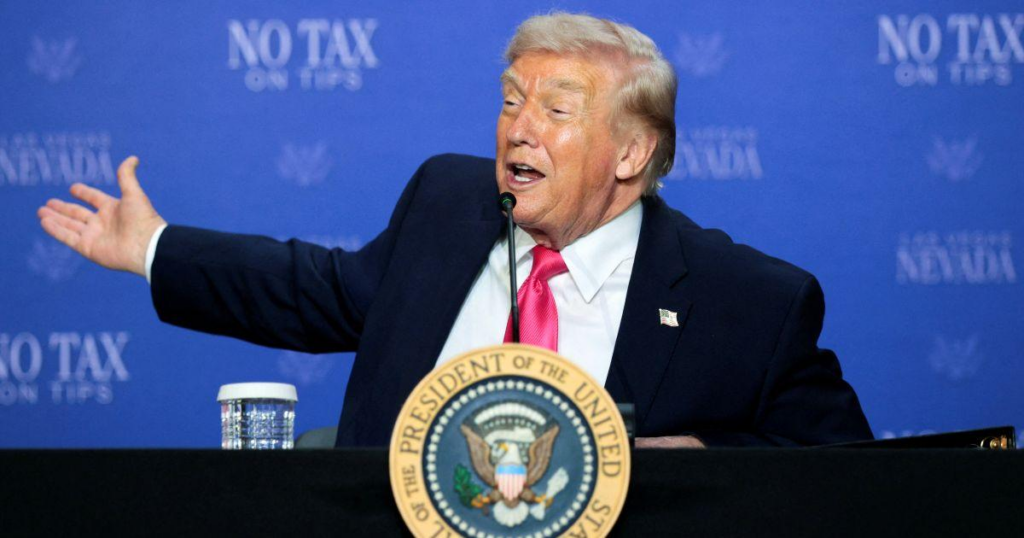
A new claim from Donald Trump is drawing global attention—and skepticism. Speaking outside the White House, Trump said Iran has agreed to return what he called its “nuclear dust” to the United States as part of a broader understanding tied to a potential peace deal.
So far, there has been no confirmation from Tehran, leaving analysts questioning both the terminology and the substance behind the claim.
What Did Trump Actually Say?
Trump framed the development as a breakthrough in efforts to prevent Iran from obtaining nuclear weapons.
“It is very important that Iran does not have a nuclear weapon… they’ve agreed to that very powerfully.”
He added that Iran had agreed to the following:
- Return “nuclear dust” buried underground
- Halt uranium enrichment
- Cooperate with U.S. efforts to retrieve nuclear material
The remarks come amid fragile diplomatic efforts to stabilize tensions following recent military confrontations between the U.S., Israel, and Iran.
What Is “Nuclear Dust”? A Non-Technical Term Explained
“Nuclear dust” is not a formal scientific or diplomatic term. It appears to be shorthand used by Trump to describe highly enriched uranium (HEU) that may now be buried or inaccessible.
What experts say it likely refers to:
- Uranium enriched to high levels (20% to 60%)
- Material stored in underground facilities
- Stockpiles potentially buried after airstrikes
According to Rafael Grossi, Iran’s nuclear material has historically been concentrated in sites such as the following:
- Natanz (a major enrichment facility)
- Isfahan (including underground storage tunnels)
Following reported U.S. strikes, some of this material may now be trapped under rubble, hence the phrase “dust.”
Why Is Highly Enriched Uranium So Sensitive?
The concern centers on how close enriched uranium is to weapons-grade material.
Key thresholds:
- 20% enrichment: Considered highly enriched
- 60% enrichment: Technically close to weapons-grade
- 90% enrichment: Weapons-grade uranium
Before the latest conflict escalation, Iran was believed to possess:
- Over 400 kg of 60% enriched uranium
- Nearly 200 kg of 20% enriched material
This stockpile significantly reduces the time needed to produce a nuclear weapon if a decision were made to do so.
Has Iran Actually Agreed to Give It Up?
This is where the situation becomes unclear.
What we know:
- Trump claims Iran has agreed to return the material
- There is no official confirmation from Iranian authorities
- No independent verification from international watchdogs
Iran has historically maintained the following:
- A right to uranium enrichment under international agreements
- Willingness to limit enrichment, but not eliminate it permanently
Sticking point in negotiations:
- U.S. position: No enrichment at all
- Iran’s position: Limited or temporary restrictions
This gap has derailed multiple past negotiations.
What Role Did U.S. Military Strikes Play?
Trump linked the alleged agreement to earlier U.S. military action, including strikes involving B-2 Spirit bombers.
Claimed impact of strikes:
- Destruction of key nuclear infrastructure
- Burial of uranium stockpiles under debris
- Disruption of enrichment capabilities
Trump previously stated these strikes had “obliterated” Iran’s nuclear program—a claim that has been debated by analysts.
What experts caution:
- Nuclear programs are difficult to eliminate entirely
- Knowledge and technical capability cannot be bombed away
- Facilities can be rebuilt or relocated
Could Iran Rebuild Its Nuclear Program?
Yes—and that’s a central concern.
Iran’s capabilities include:
- Advanced centrifuges for uranium enrichment
- Technical expertise to restart operations
- Potential to build new underground facilities
Even if existing stockpiles are removed or destroyed, capacity remains.
This is why verification—not just agreements—is critical.
What Would “Returning Nuclear Material” Involve?
If such an agreement exists, implementation would be complex.
Likely steps:
- Verification by international inspectors (e.g., IAEA)
- Extraction of buried material from damaged sites
- Secure transport out of Iran
- Monitoring compliance over time
Each step presents logistical and political challenges.
How Does This Fit Into Broader Iran Negotiations?
The claim comes amid ongoing efforts to stabilize relations after a period of escalation.
Key issues in current negotiations:
- Uranium enrichment limits
- Sanctions relief
- Verification mechanisms
- Regional security concerns
The alleged “nuclear dust” agreement—if real—would represent a significant concession by Iran.
But without confirmation, it remains speculative.
Why Skepticism Is High
Several factors are fueling caution among analysts:
1. Lack of independent verification
No confirmation from:
- Iranian government
- IAEA
- Other international observers
2. Unusual terminology
“Nuclear dust” is not used in:
- Nuclear science
- Arms control agreements
3. Historical precedent
Past negotiations have the following:
- Been lengthy and complex
- Required detailed, verifiable frameworks
What Happens Next?
Watch for:
- Statements from Iranian officials
- Updates from the IAEA
- Formal diplomatic announcements
- Satellite or intelligence-based verification
Until then, the claim remains unverified but significant.
TL;DR
- Donald Trump says Iran agreed to return “nuclear dust” (likely enriched uranium)
- No confirmation from Iran or international agencies
- The term is informal and not scientifically defined
- The issue centers on highly enriched uranium and nuclear weapon risk
- Verification, not statements, will determine credibility