
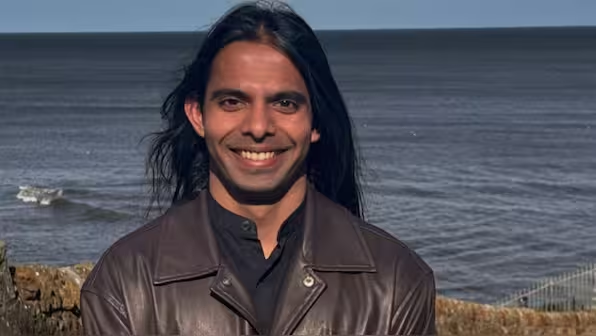
Q Manivannan is making political history in Scotland after winning a seat in the Scottish Parliament while living in the country on a student visa, a development that has ignited both celebration and fierce political debate.
The Indian-origin candidate, who identifies as non-binary and uses they/them pronouns, was elected as one of four MSPs for the Scottish Greens in the Edinburgh and Lothians East regional list.
Manivannan’s victory stands out not only because of their background as a queer Tamil immigrant but also because they are not a permanent resident of the United Kingdom. Their election is already becoming a flashpoint in wider debates around immigration, representation, and the evolving rules governing democratic participation in Scotland.
Who is Q Manivannan?
Q Manivannan is an Indian-origin academic, poet, and political activist from Tamil Nadu who moved to Scotland in 2021.
Academic and activist background
Manivannan came to Scotland to study international relations at the University of St Andrews, one of the UK’s oldest and most prestigious universities.
They describe themselves as:
- A queer Tamil immigrant
- An anthropologist
- A poet
- A social justice advocate
Their activism has focused on:
- Migration and immigrant rights
- Queer and transgender rights
- Identity politics
- Anti-racism and social justice movements
Following the election victory, Manivannan delivered a speech that quickly spread online:
“I am a transgender Tamil immigrant… I am to some in this country everything that the hateful despise, and I am standing here as your MSP now with care.”
How was Q Manivannan able to run for Scottish Parliament on a student visa?
This question has become the center of political discussion following the election.
The law changed in 2020
Manivannan was legally eligible to contest the election because of reforms introduced through the:
Scottish Elections (Franchise and Representation) Act 2020
Before the legislation was passed:
- Candidates generally needed indefinite leave to remain in the UK
After the reforms:
- Individuals with valid immigration status, including temporary visas, became eligible to stand in Scottish elections
That means people on:
- Student visas
- Work visas
- Other legal immigration statuses
can now contest elections in Scotland.
Why the issue is controversial
Critics argue that lawmakers should have permanent legal status in the country before serving in parliament.
Supporters counter that:
- Legal residents contribute to society and communities
- Democratic participation should reflect modern immigration realities
- Representation should not be limited solely to citizens or permanent residents
The debate has quickly become part of a broader political argument over immigration policy in both Scotland and the wider UK.
What happens to Manivannan’s visa now?
According to reports from BBC Scotland and The Telegraph, Manivannan may need to renew or transition their visa status during the parliamentary term.
Why visa questions matter
Although elected as an MSP, immigration rules still apply.
Reports indicate:
- Their current status is tied to a student visa
- A graduate visa may be needed after studies conclude
- MSP salary levels could make future visa applications easier
That unusual situation has added another layer to the public conversation, with some critics questioning whether elected office should intersect with temporary immigration status.
Why this election matters beyond Scotland
Manivannan’s victory reflects several major political and cultural shifts happening simultaneously.
Representation in modern politics
The election highlights growing visibility for:
- LGBTQ+ politicians
- Immigrant communities
- Non-binary representation in public office
- Younger activist-driven political movements
For supporters, the result symbolizes a more inclusive political system.
A lightning rod in culture wars
At the same time, the election has triggered backlash online, particularly around:
- Immigration
- Gender identity
- National identity politics
- Electoral reform
That reaction mirrors wider political tensions unfolding across Europe and North America, where debates over migration and identity increasingly shape elections.
How the Scottish Greens responded
The Scottish Greens celebrated the result publicly, calling it a significant moment for the party’s parliamentary presence.
The party stated that:
- Four Green MSPs were elected in Edinburgh and Lothians East
- The total number of Green MSPs across Scotland increased to seven
The victory is expected to strengthen the party’s focus on:
- Climate policy
- Social justice
- Immigration reform
- LGBTQ+ rights
Why Q Manivannan’s story is drawing global attention
The image of an Indian-origin transgender student entering parliament while on a student visa is politically unusual enough to attract international headlines.
But beyond the symbolism, the story touches several larger questions:
- Who gets to participate in democracy?
- How should immigration and political rights intersect?
- What does representation look like in increasingly global societies?
For supporters, Manivannan represents the evolution of modern democratic politics.
For critics, the election raises concerns about the boundaries of political eligibility and citizenship.
Either way, their arrival in the Scottish Parliament is likely to remain part of a much bigger debate far beyond Scotland itself.
TL;DR
- Q Manivannan, an Indian-origin non-binary student, has won a seat in the Scottish Parliament
- They moved from Tamil Nadu to Scotland in 2021 to study at the University of St Andrews
- Manivannan was eligible to run because of Scotland’s 2020 election law reforms
- Their victory has sparked debate over immigration, identity, and political representation
- They may need to renew or transition their visa during their parliamentary term