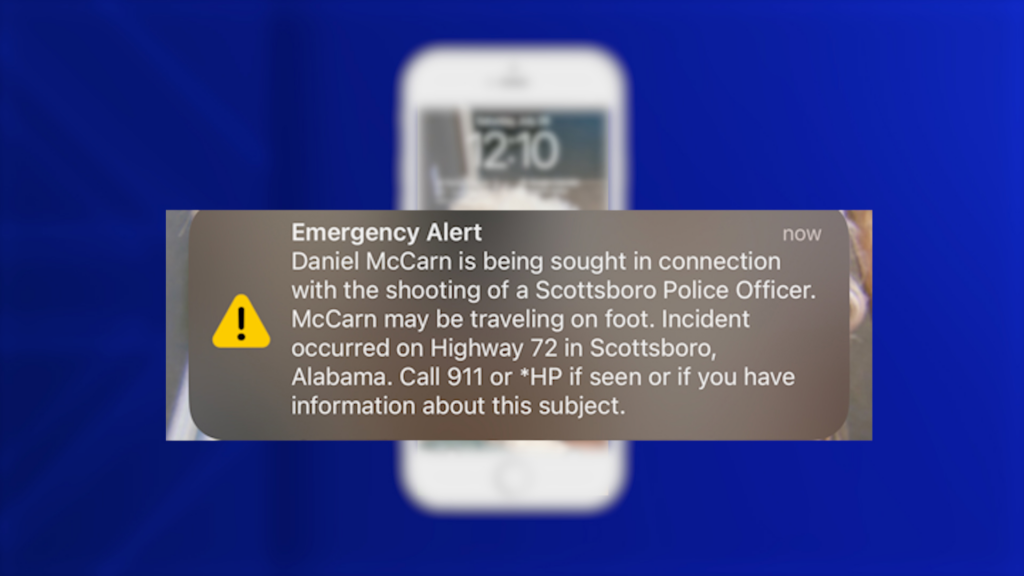
When your phone buzzes with an emergency notification, you probably expect an Amber Alert or a weather warning. But occasionally, Americans receive something less familiar: a Blue Alert.
The Blue Alert program is a national public safety system designed to notify the public when a suspect has seriously injured or killed a law enforcement officer, or poses an imminent threat to one. Like other emergency alert systems, it relies on widespread public awareness to help authorities act quickly.
Here’s what a Blue Alert is, how it works, and why it has become an important tool in modern policing.
What Is a Blue Alert?
A Blue Alert is an emergency notification issued when:
- A sworn law enforcement officer has been killed or seriously injured in the line of duty
- An officer is missing under suspicious circumstances
- Authorities believe a suspect poses an ongoing, credible threat to law enforcement or the public
The alert provides descriptive details, such as the suspect’s appearance, vehicle information, or last known location, to help citizens assist in locating the individual.
How It Compares to an Amber Alert
Most Americans are familiar with the Amber Alert system, which is activated in child abduction cases. Blue Alerts operate on a similar principle:
- Amber Alert: Protects abducted children
- Silver Alert: Often used for missing seniors or vulnerable adults
- Blue Alert: Protects law enforcement officers and the broader community
The key difference lies in the triggering event. A Blue Alert centers specifically on violence against police officers and the perceived risk of further harm.
How Does the Blue Alert Program Work?
The Blue Alert program operates through coordination between local, state, and federal agencies. It is not automatically triggered nationwide; instead, it is authorized and issued by individual state law enforcement agencies, often in coordination with federal partners.
The Role of the National Blue Alert Network
At the federal level, the program is supported by the National Blue Alert Network, which helps states coordinate and share information.
The network was established under federal legislation aimed at creating consistent standards across states. However, each state sets its own criteria and activation protocols.
For legal background, reporters should consult the U.S. Department of Justice’s official Blue Alert page (justice.gov) and the federal statute establishing the program.
How Alerts Reach the Public
Once activated, a Blue Alert is distributed through multiple communication channels:
- Wireless Emergency Alerts (WEA) sent to mobile phones
- Television and radio broadcasts
- Highway electronic message boards
- Social media platforms operated by law enforcement
- News media partnerships
This multi-platform approach ensures rapid, wide distribution—especially during the critical early hours after an incident.
A helpful visual here could be an infographic mapping the flow of information from local law enforcement to federal coordination to public distribution channels.
When Is a Blue Alert Issued?
Blue Alerts are not issued for every attack on an officer. States typically require several criteria to be met:
1. Serious Harm or Death
A sworn officer must have been killed or seriously injured while on duty.
2. Credible Ongoing Threat
Authorities must reasonably believe the suspect poses a continuing threat to law enforcement or the public.
3. Actionable Information
Police must have specific details to share, such as:
- A physical description
- A vehicle description or license plate number
- Known location data
Without actionable information, broadcasting an alert could create panic without increasing the chance of apprehension.
Because states maintain discretion, criteria can vary slightly. Journalists should verify state-specific standards through official state police websites or public safety departments before publication.
Why Does the Blue Alert Program Exist?
Officer Safety and Rapid Response
Law enforcement officers face inherent risks. When one is attacked, authorities must quickly determine whether the suspect is still at large and capable of causing additional harm.
The Blue Alert system is built on a simple premise: more eyes mean faster results.
Public tips often play a critical role in apprehending suspects. Similar to Amber Alerts, the effectiveness of a Blue Alert depends on timely and accurate information reaching the public.
Deterrence and Visibility
There’s also a broader deterrence argument. Publicizing attacks on officers—and the swift mobilization that follows—signals that such crimes will trigger an immediate and coordinated response.
Community Involvement
The program enlists civilians as partners in public safety. Rather than being passive observers, residents become active participants in identifying vehicles, spotting suspects, or reporting sightings.
How Effective Are Blue Alerts?
Effectiveness can be difficult to measure uniformly because:
- States collect and report data differently
- Some cases involve rapid apprehension before alerts are widely distributed
- In other cases, suspects are located outside the alert region
That said, law enforcement agencies often credit public tips with helping locate suspects in high-risk situations.
For accurate data, journalists should reference annual DOJ reports or state-level public safety statistics. Avoid citing success rates without verifying through official documentation.
Controversies and Criticisms
No public alert system is without debate.
Alert Fatigue
Some critics argue that frequent emergency alerts can lead to “alert fatigue,” where people begin to ignore notifications.
If too many alerts are sent without direct relevance to recipients’ geographic area, public responsiveness may decline.
Geographic Scope
In some cases, Blue Alerts have been sent across large regions—even statewide—raising questions about whether distribution should be more targeted.
Public Safety vs. Public Disruption
Emergency alerts interrupt phones with loud tones and persistent notifications. While this is intentional, it has sparked discussions about proportionality and targeting criteria.
Any coverage of criticisms should cite reputable outlets, academic research on emergency alert systems, or official statements from public safety officials.
What Should You Do If You Receive a Blue Alert?
If your phone receives a Blue Alert:
- Read the details carefully. Note suspect descriptions or vehicle information.
- Do not attempt to intervene. Suspects are considered dangerous.
- Call authorities if you have credible information. Use the official tip line provided in the alert.
- Avoid spreading unverified rumors on social media. Misinformation can hinder investigations.
The goal is awareness, not vigilantism.
How Blue Alerts Fit Into the Broader Emergency Alert System
Blue Alerts are part of a larger emergency notification ecosystem that includes:
- Weather alerts from the National Weather Service
- Amber Alerts for child abductions
- Silver Alerts for missing seniors
- Public safety evacuation notices
Together, these systems rely on the Wireless Emergency Alerts infrastructure managed at the federal level.
For a deeper dive, consider linking to FEMA’s explanation of Wireless Emergency Alerts (ready.gov) and FCC documentation on emergency broadcast standards.
Why the Blue Alert Program Matters
At its core, the Blue Alert program reflects a shift in modern policing: rapid communication can be as critical as physical response.
By broadcasting credible threats in real time, authorities aim to:
- Protect officers from further harm
- Prevent escalation
- Capture suspects more quickly
- Enhance overall public safety
Whether the system continues to evolve may depend on how effectively it balances urgency with precision.
As emergency communication technology improves—through geotargeting and data analytics—the Blue Alert program may become more refined and targeted in the years ahead.
TL;DR
- A Blue Alert is a public safety notification issued when a law enforcement officer is killed, seriously injured, or threatened.
- It provides suspect information to help the public assist in locating dangerous individuals.
- Alerts are issued by state agencies and coordinated nationally through the National Blue Alert Network.
- Distribution happens via mobile alerts, TV, radio, and highway signs.
- The program aims to enhance officer safety and prevent further harm, but has sparked debate over alert fatigue and geographic scope.